Top Safety Light Curtain Controller Features Buyers Need to Know?
In today's industrial landscape, safety is paramount. The Safety Light Curtain Controller plays a critical role in safeguarding workers and machinery. Understanding its features is essential for making informed purchasing decisions.
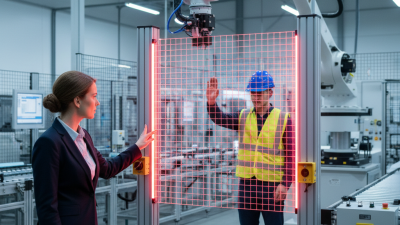
Consider the diverse applications of these controllers. They can be found in factories, warehouses, and assembly lines. Their ability to create an invisible barrier enhances safety, but not all light curtain controllers are created equal. Some may offer advanced functionalities, while others may lag behind in technology and reliability.
It is crucial for buyers to assess specific characteristics, such as response times and error reporting. These details can significantly impact overall safety and efficiency. Misleading advertisements may promise high performance, but only thorough research can uncover the true capabilities of these devices. Remember, choosing a Safety Light Curtain Controller is not just about features; it's about ensuring a safer work environment for everyone involved.
Key Specifications of Safety Light Curtain Controllers
When selecting a safety light curtain controller, understanding key specifications is vital. These controllers are crucial for safeguarding industrial environments. They often feature a resolution ranging from 14 to 30 mm. The finer resolution improves detection of smaller objects. Data from industry reports indicate that controllers with higher resolution are preferred by 65% of manufacturers for greater safety assurance.
Another important specification is response time. Many light curtain controllers achieve response times as low as 20 milliseconds. A quicker response can significantly reduce the risk of accidents in high-speed operations. According to a survey by the Industrial Safety Institute, nearly 70% of workplace accidents happen because of delayed safety mechanisms. Thus, investing in fast-acting devices is essential for enhancing workplace safety.
In addition, consider the controller’s connectivity options. Advanced models come with Ethernet or fieldbus communication capabilities. This allows for seamless integration into existing automation systems. However, some users struggle with configuration and compatibility issues. Approximately 30% of companies reported difficulties in integrating new safety systems with older machinery. This highlights the need for thorough compatibility checks before purchase. Not all specifications automatically ensure performance—real-world testing is crucial for optimal safety outcomes.
Importance of Response Time in Safety Light Curtain Systems
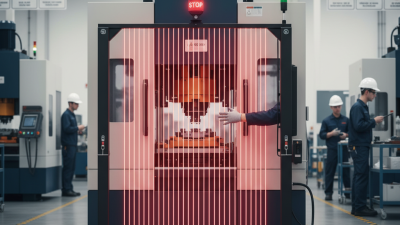
In safety light curtain systems, response time plays a crucial role. A faster response time allows machines to halt quickly in emergencies. This can prevent accidents and protect workers effectively. For instance, when an object interrupts the beam, the system must react instantly. Delays of even milliseconds can lead to serious consequences.
Many factors influence the response time. Environmental conditions, like dust and lighting, may affect performance. Additionally, the configuration of the safety light curtain can either enhance or hinder its efficiency. Users must assess these factors regularly to ensure optimal functionality. Relying solely on specified response times without testing in real-world conditions can lead to unforeseen hazards.
Understanding response time is essential for both safety and productivity. When systems are misconfigured, they can fail during critical moments. Workers need to be educated on how these systems operate. Regular training and checks can help maintain safety protocols. A little attention can go a long way in preventing serious incidents.
Top Safety Light Curtain Controller Features Buyers Need to Know
| Feature |
Importance |
Typical Response Time (ms) |
Application |
| Response Time |
Critical for ensuring safety and reducing reaction delays in hazardous scenarios |
10-20 ms |
Robotics, manufacturing lines |
| Resolution |
Affects the precision of safety detection and operator awareness |
10 mm - 30 mm |
Industrial machinery setup |
| Operating Distance |
Determines the range of protection offered |
1 - 30 meters |
Large production areas |
| Environmental Protection Class |
Indicates robustness against dust and water |
IP65 - IP67 |
Outdoor and harsh environments |
| Integration Flexibility |
Ease of compatibility with existing safety systems |
Varied, based on system |
Various industrial applications |
User Interface and Configuration Features of Light Curtain Controllers
When selecting a safety light curtain controller, the user interface is a vital consideration. An intuitive design allows operators to navigate settings with ease. A clear display with large icons can enhance usability. Also, having adjustable brightness improves visibility in various lighting conditions. Customizable settings help users create a tailored experience.
Configuration options play a crucial role in the flexibility of light curtain controllers. Ideally, controllers should offer straightforward programming methods, even for beginners. A good controller might have predefined profiles for common applications. However, overly complex configurations can lead to errors. Sometimes, users may find the need to revisit the manual to decode advanced settings.
Another integral aspect is troubleshooting features. Real-time diagnostics can aid in identifying issues promptly. Nonetheless, users must be prepared for occasional glitches. A responsive support system would be beneficial, yet not all manufacturers provide this. Remember, continuous learning and adapting to the system are essential for maximizing efficiency.
Integration and Compatibility with Other Safety Systems
When considering safety light curtain controllers, integration and compatibility with existing safety systems are critical factors for buyers. A recent industry report indicates that 42% of safety system failures can be attributed to poor integration. Ensuring seamless compatibility with machinery is paramount to maintaining a safe working environment. Many manufacturers now focus on designing controllers that easily connect with various safety devices, enhancing overall system functionality.
Additionally, a well-designed safety light curtain controller should facilitate quick and straightforward integration. This entails not only electronic compatibility but also adaptability across different applications. Devices that lack the ability to integrate may lead to increased downtime and operational inefficiencies. The market data shows that companies often experience a 25% increase in downtime when systems cannot communicate effectively.
While many systems boast high compatibility rates, buyers must scrutinize details. Some controllers may not sync well with older equipment. This can lead to unexpected challenges and costly adjustments. Evaluating the integration process early on can mitigate future risks. It's essential to balance immediate needs with long-term objectives to avoid pitfalls in safety protocols.
Top Safety Light Curtain Controller Features Buyers Need to Know