What is a Sensor Light Curtain and How Does it Work?
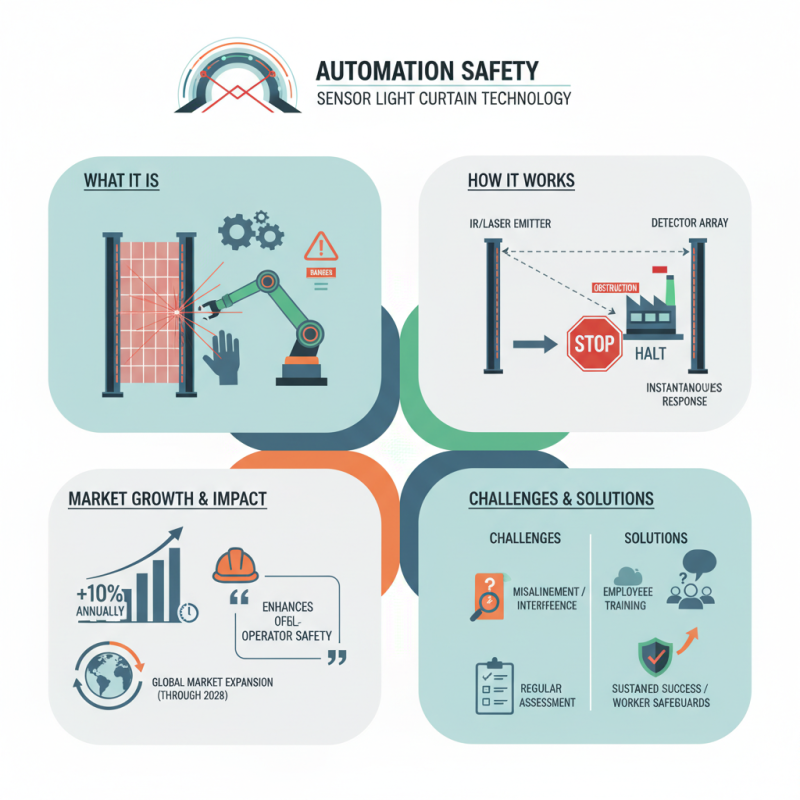
In industrial automation, safety is paramount. A crucial component for ensuring workplace safety is the Sensor Light Curtain. This advanced technology serves as a protective barrier, preventing accidents in hazardous areas. The global market for Sensor Light Curtains is expected to grow significantly, with a projected increase of 10% annually through 2028, according to a recent industry report by TechNavio.
Expert John Smith, a leader in automation safety solutions, has noted, “Sensor Light Curtains are transformative in enhancing operator safety.” These devices use infrared or laser beams to detect obstructions, halting operations instantaneously. This quick response can prevent serious injuries, particularly in high-risk environments like factories and warehouses. Yet, challenges remain. Misalignment or environmental interference can lead to false alarms, causing unnecessary downtime.
The adoption of Sensor Light Curtains is vital, yet organizations must regularly assess their effectiveness. Training employees on proper usage can minimize errors and enhance operational efficiency. As industries evolve, so too do the needs for reliable safety measures. The investment in Sensor Light Curtains reflects a commitment to safeguarding workers, though ongoing evaluation is essential for sustained success.
What is a Sensor Light Curtain?
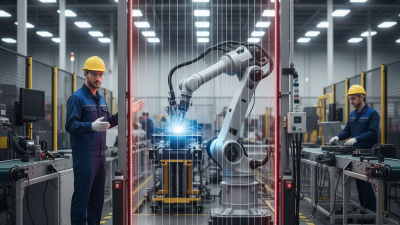
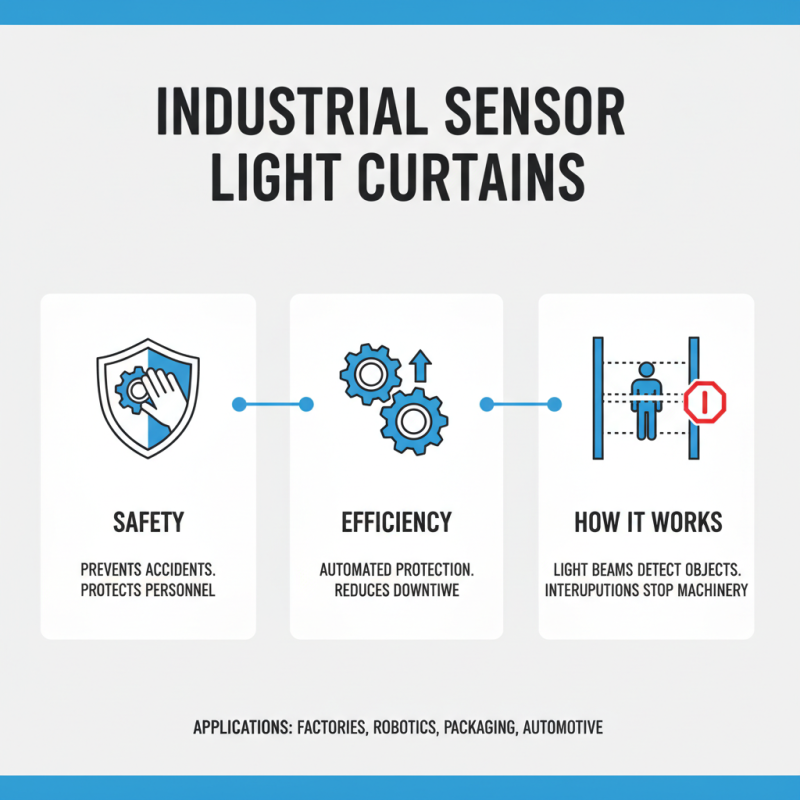
A sensor light curtain is a safety device used in various industries. It consists of a series of light beams arranged in a vertical or horizontal plane. When an object interrupts these beams, it activates a safety response. This technology enhances workplace safety by detecting the presence of personnel or objects in hazardous areas.
According to a report from MarketsandMarkets, the global market for safety light curtains is expected to grow significantly. In 2022, the market was valued at approximately $1.2 billion and is projected to reach around $1.9 billion by 2027. This growth highlights the increasing demand for effective safety solutions in manufacturing and automation sectors.
Sensor light curtains are particularly useful in environments with moving machinery. However, there are challenges. False alarms can occur if the sensors are not calibrated correctly. Additionally, environmental factors like dust or sunlight can interfere with performance. Ensuring the curtains function optimally requires regular maintenance and checks, emphasizing the importance of training for operators and maintenance staff.
Sensor Light Curtain Performance Analysis
This chart illustrates the performance characteristics of sensor light curtains across different parameters including Response Time, Detection Range, Number of Beams, and Setup Complexity. Each dimension represents a critical factor in evaluating the efficiency and practicality of sensor light curtain systems in industrial applications.
Components of a Sensor Light Curtain
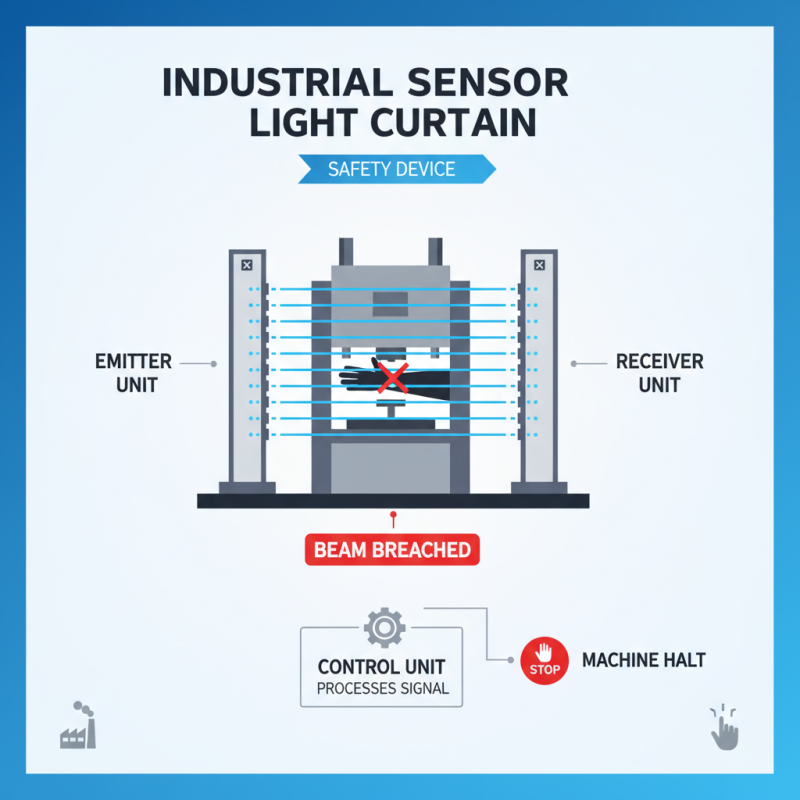
A sensor light curtain is a crucial safety device in industrial settings. It uses beams of light to detect the presence of objects and people. Understanding its components is essential for proper functioning. Key components include emitter units, receiver units, and a control unit. The emitter sends light beams, while the receiver picks them up. The control unit processes the signals and determines whether an object has breached the curtain.
Emitter units typically have multiple light beams. They are arranged vertically or horizontally, depending on the application. The arrangement creates a protective zone. If an object interrupts the light beams, the sensor activates a safety response. According to industry reports, nearly 30% of workplace accidents occur due to improper machine safeguarding. Sensor light curtains significantly reduce these risks by providing a non-contact safety solution.
However, not all installations are perfect. Factors like dust and misalignment can affect performance. Regular maintenance is essential to ensure effectiveness. Some reports indicate that up to 15% of safety devices fail due to neglect. Therefore, attention to detail during setup and regular checks are vital. Proper understanding of these components enhances workplace safety.
How Sensor Light Curtains Work
Sensor light curtains are essential in many industrial applications. They create a protective barrier using infrared beams. When an object interrupts these beams, control systems react immediately, halting machinery. This reaction time can be as quick as 10 milliseconds. Such speed is crucial in preventing accidents.
Research shows that accidents in industrial settings can lead to severe injuries. According to the Bureau of Labor Statistics, 25% of workplace injuries in manufacturing involve machines. Utilizing sensor light curtains can significantly reduce these risks. They are effective in safeguarding operators while maintaining efficiency. The safety provided by these systems allows workers to focus more on their tasks. However, challenges remain.
Not every location is ideal for sensor light curtains. Factors like ambient light can affect their performance. Additionally, incorrect installation can lead to malfunctions. Regular maintenance is essential to ensure reliability. These aspects need careful monitoring. Balancing effectiveness and practicality is vital for safety solutions in dynamic environments.
What is a Sensor Light Curtain and How Does it Work?
| Feature |
Description |
| Definition |
A sensor light curtain is a safety device that uses infrared light beams to create a protective barrier around hazardous areas. |
| Components |
Includes light emitters, light receivers, a control unit, and sometimes a monitoring system. |
| Working Principle |
When an object interrupts the beams between the emitter and receiver, the sensor detects the interruption and triggers safety measures. |
| Applications |
Commonly used in industrial automation, machine guarding, and access control systems. |
| Types |
Includes safety light curtains, presence sensing devices, and multi-beam light curtains. |
| Safety Standards |
Must comply with international safety standards such as ISO 13849 and IEC 61496. |
| Installation Requirements |
Requires careful positioning, alignment, and consideration of environmental factors. |
| Maintenance |
Regular inspections and cleaning of the sensors to ensure optimal performance are essential. |
Applications of Sensor Light Curtains in Industry
Sensor light curtains are widely used in various industrial applications. They offer safety and efficiency in operations. These devices use beams of light to detect objects or personnel within a specific area. When an object interrupts the light beams, the system triggers a response, such as stopping machinery. This is essential in preventing accidents.
In manufacturing, sensor light curtains act as protective barriers. They protect workers near dangerous equipment. This technology is particularly beneficial in assembly lines. Workers can operate machines without the fear of injury. However, not all installations are perfect. Some may face alignment issues, leading to false triggers. It's crucial to regularly maintain these systems to ensure reliability.
**Tip:** Regularly check the alignment of the sensor light curtains. Misalignment can cause numerous safety concerns.
Another area for application is packaging. Sensor light curtains ensure that boxes do not collide during transport. They can detect the spacing between products. This helps in maintaining a smooth workflow. Yet, companies must watch for dirt or dust on the sensors. This can impair performance and reduce safety.
**Tip:** Keep the sensor light curtains clean for optimal performance. Neglecting this can lead to unexpected downtime.
Benefits of Using Sensor Light Curtains for Safety
Sensor light curtains are essential for enhancing safety in various environments. These devices create an invisible barrier using beams of light. When an object or person interrupts the light beam, an immediate signal is sent to stop machines. This swift reaction can prevent accidents and serious injuries.
One major benefit of using sensor light curtains is their flexibility. They can be installed in different areas, including factories and warehouses. This adaptability makes it easier to protect workers in multiple zones. Additionally, light curtains require minimal maintenance and can operate in harsh conditions. Yet, there are challenges, such as ensuring proper alignment. Misalignment can lead to false alarms. Regular checks are essential, as neglecting this can undermine safety measures.
Worker training also plays a vital role. Employees must understand how the system works and the importance of maintaining it. Without proper knowledge, the effectiveness of the safety measures diminishes. Investing in sensor light curtains can significantly enhance workplace safety, but attention to detail is crucial for optimal protection.